
Trust the Lucky Dog team to provide you with the best sewer & drain solutions for residential and commercial properties.
If you're looking for a team that will get the job done right, on-time, and when you need it, then you've found the right people.


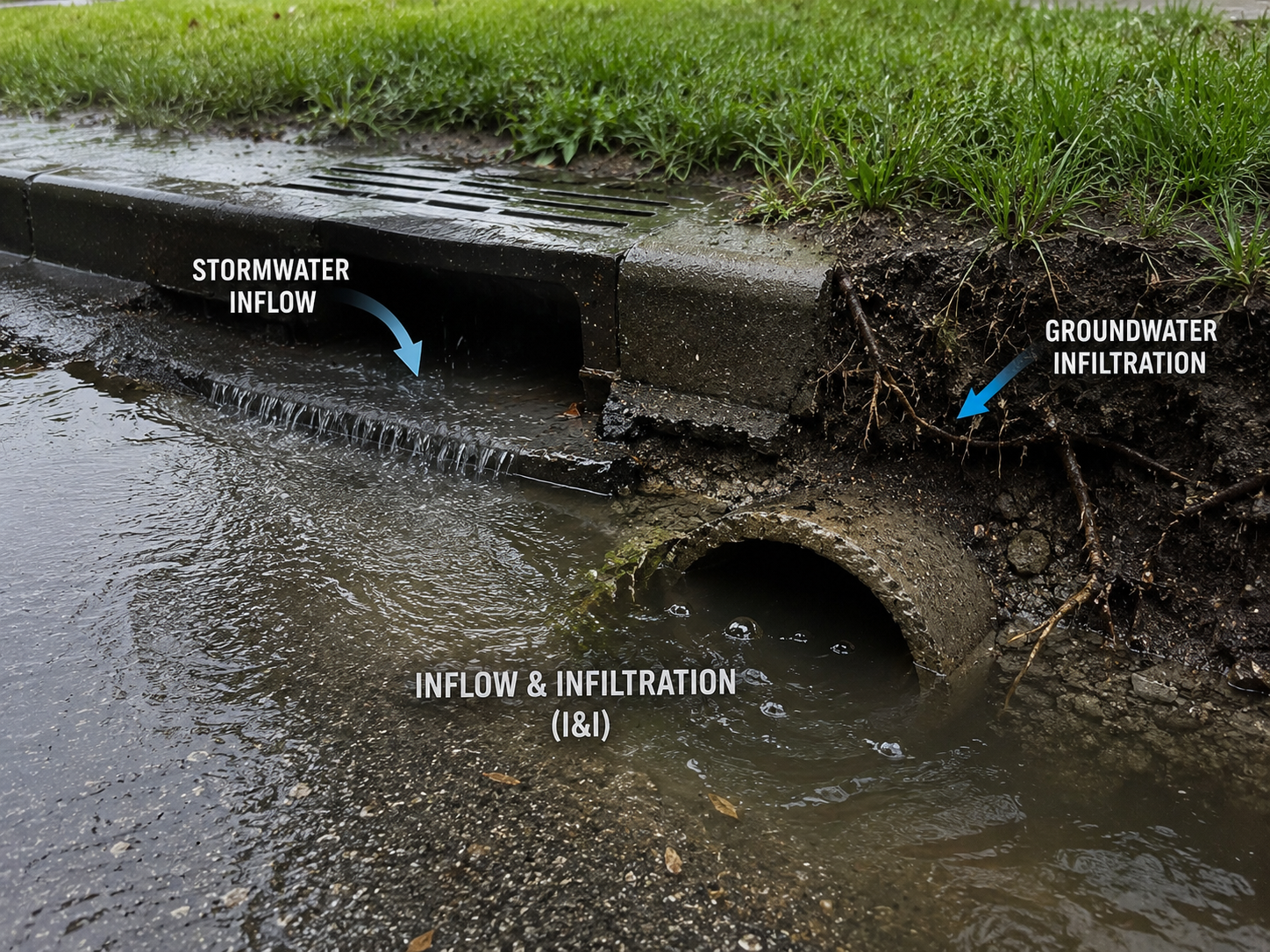
St. Louis Park requires a Property Maintenance Inspection (the city’s point-of-sale permit) every time a home is sold or ownership transfers, and the resulting certificate must be handed to the buyer and title company at closing. That inspection covers siding, roof, garage, and interior condition under the property maintenance code, not the sewer lateral. The city does not inspect or certify sewer laterals as part of a sale, and a sewer scope is only a recommended add-on that buyers arrange privately, not a municipal requirement. Ownership of the sewer line itself splits at the property boundary: per the city’s own service-line guidance, the homeowner is responsible for everything from the house out to and including the connection to the public main, so any lateral crack, root intrusion, or break is the owner’s repair cost. As of July 2026, there is no St. Louis Park city council resolution authorizing participation in the Metropolitan Council’s 2026 Private Property Inflow and Infiltration Grant Program. Edina and Minneapolis both have documented 2026 authorizations; St. Louis Park does not. So, there is currently no dedicated I&I lateral-repair grant for St. Louis Park homeowners this cycle. The city’s active utility-side programs are narrower: a now-closed (as of April 2026) rebate of up to $200–$300 per fixture for WaterSense toilets, irrigation components, and Energy Star washers/dishwashers, and an optional, privately underwritten service line warranty through Service Line Warranties of America that homeowners can purchase to cover surprise water or sewer line breaks.
Edina’s Sanitary Sewer Program cleans public mains on a 3-to-5-year cycle, and City Code Section 28-91 puts maintenance and repair responsibility for everything from the property up to and including the connection to the public main squarely on the private owner. Edina actively enforces sump pump and foundation-drain discharge rules as a nuisance-abatement matter: City Code Section 23-95(3) designates improper sump water discharge a nuisance affecting health, safety, and welfare, and the city’s Standard Plate 311 sets the technical requirements: a perforated cover or pop-up head on the discharge pipe, a minimum 2-inch air gap, a discharge point at least 5 feet from the property line if it drains into the right-of-way, and a flat prohibition on discharging onto a neighbor’s private property. Violations trigger a first-notice compliance letter with 30 days to fix the problem before the city moves to enforcement action and fines. Unlike St. Louis Park and Hopkins, Edina has documented, active participation in the 2026 Metropolitan Council Private Property Inflow and Infiltration Grant Program. The City Council passed Resolution No. 2025-109 authorizing a grant application for the program, meaning Edina residents doing qualifying lateral repair or foundation-drain-disconnection work between January 1 and December 31, 2026 have a path to 50%-of-cost grants (up to $5,000, or up to $10,000 for those meeting the city’s equity criteria). Homeowners should ask Edina Public Works (952-826-0375) how to apply under that authorization. Sewer backups themselves are treated as the homeowner’s problem unless the city was demonstrably negligent, with homeowner’s insurance the typical first line of recovery.
Minneapolis runs one of the most fully built-out I&I assistance program in the Twin Cities: the Private Sewer Lateral Grant, funded through the Metropolitan Council, helps homeowners pay for sanitary sewer lateral repair and replacement, and the city has an active, funded 2026 grant application on file with MCES. Funding tiers scale with location (50% up to $5,000; 75% up to $7,500; or up to $10,000 depending on the property’s mapped eligibility, viewable on the city’s interactive map), awards are distributed by lottery with a waitlist, and the application window is a three-week period expected to open in March 2027, with awardees notified in April and all repair work required to be completed within six months of the award. Eligibility is limited to owner-occupied single-family, duplex, or triplex homes in Minneapolis (condo/townhome associations and city employees are excluded, and only one application per property is allowed), and applicants must submit a licensed contractor’s report documenting the needed repair plus at least three bids from the city’s Target Market Program contractor list if they are awarded the grant (a change made in 2026 from the previous regulations requiring three bids before the grant application). Applicants are only required to solicit one bid prior to applying for the grant. Covered costs include lateral pipe repair/replacement, foundation drain disconnection, and inspection/cleaning costs tied to an actual repair, and any amount the grant doesn’t cover can be assessed to the homeowner’s property taxes rather than paid up front. However, the grant only funds future work (not reimbursement for repairs already completed) and explicitly cannot be used to satisfy a home-sale contingency, so timing matters if a sale is pending. Minneapolis has approximately $250,000 in grant money available, which is not much considering that a full sewer repair typically averages $10,000. This only allows approximately 10 homes to receive repairs under the grant program, highlighting that a key purpose of the program is to increase Minneapolis residents’ awareness of sewer pipe defects and I&I.
Hopkins splits sewer responsibility the same way as Edina and St. Louis Park: property owners are responsible for the entire sanitary sewer service line from the connection at the city main into the house, and for all costs tied to problems on that line, including a citywide Sewer Cleaning Program that jets the public mains on a rotating three-year schedule (the 2026 cleaning area runs south of Excelsior Boulevard). This is a process that can temporarily cause gurgling or sewer-gas odor at the fixture level but does not repair private laterals. Unlike Edina and Minneapolis, no Hopkins City Council resolution authorizing participation in the Metropolitan Council’s 2026 Private Property Inflow and Infiltration Grant Program exists, so there is currently no dedicated I&I lateral-repair grant available to Hopkins homeowners in 2026. What Hopkins does offer is a street restoration reimbursement: when a sewer or water service repair requires cutting into the street, the city caps a homesteaded single-family or duplex owner’s street-restoration cost exposure at $1,250 and reimburses anything above that, provided the homeowner gets city approval before work starts (non-homestead properties pay the full restoration cost). There is no dedicated point-of-sale sewer inspection requirement in Hopkins; the city’s Public Works line (952-939-1382) handles both the cleaning program and reimbursement approvals.

St. Louis Park requires a Property Maintenance Inspection whenever a home is sold, and the certificate goes to the buyer and title company at closing. That inspection covers siding, roof, garage, and interior condition. It does not inspect or certify the sewer lateral. A sewer scope is a recommended add-on that buyers arrange privately. Hopkins has no point-of-sale sewer inspection requirement at all. If you want to know the condition of the line, you have to look.